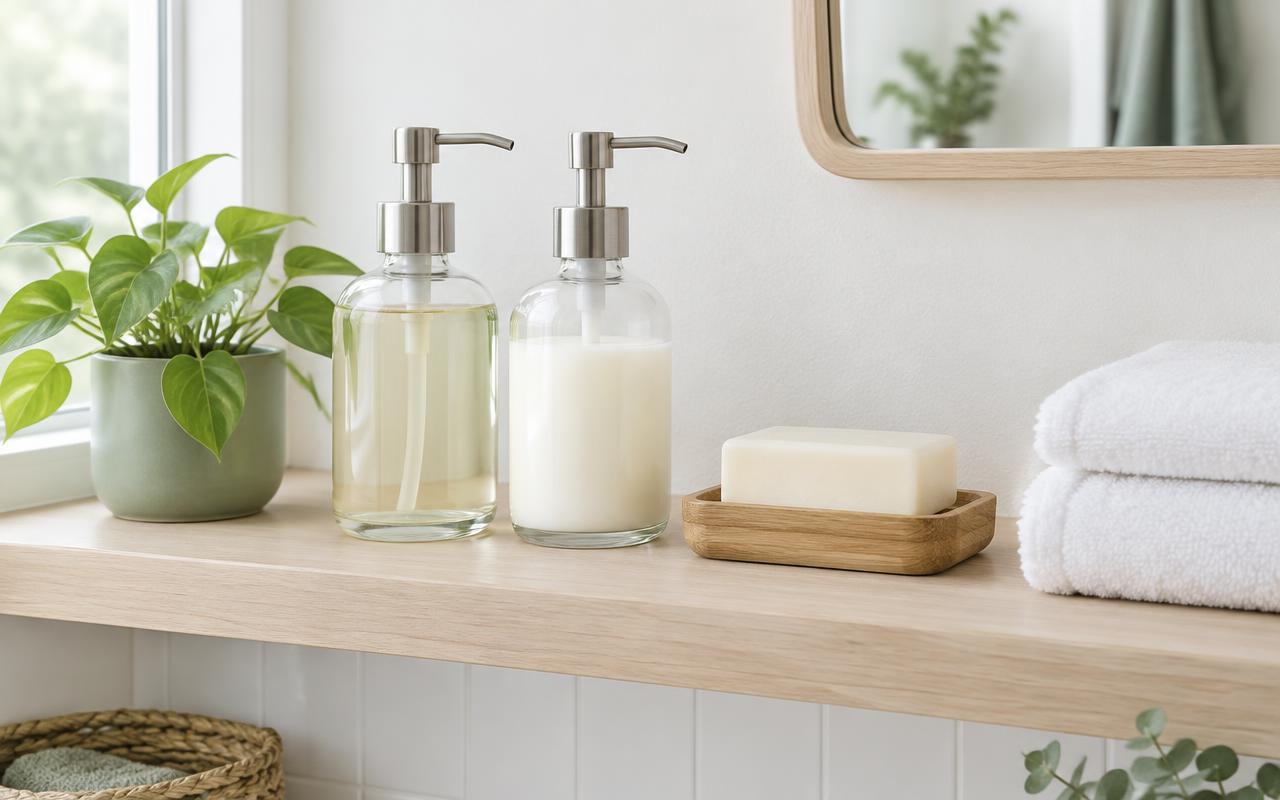
Walk down any store aisle and you'll see words like "clean," "natural," and "non-toxic" everywhere. They sound reassuring. But for most products, these words have no official definition, so a brand can use them however it likes.
The good news: you don't need a chemistry degree to tell the difference. These five questions will get you most of the way there.
-
Does it tell you everything that's in it?
Look for a full ingredient list. Then look for one word in particular: "fragrance" (or "parfum"). Under U.S. rules, companies can list their fragrance ingredients simply as "fragrance," because the formulas are treated as trade secrets. That one word can stand for many ingredients you'll never see.
Try this: check the labels of the products your family uses every day, like soap, lotion, shampoo, and laundry detergent. If "fragrance" is on them, consider a fragrance-free version, or a brand that lists what its scent is made from.
-
Does it have a real certification, and what does it mean?
Seals can help, as long as you know what each one checks:
- USDA Organic: the agricultural ingredients meet USDA organic standards.
- MADE SAFE: the product is screened against a list of thousands of substances linked to harm.
- EWG Verified: the product meets the Environmental Working Group's standards for ingredients and transparency.
- Leaping Bunny: the product is cruelty-free. This one is about animal testing, not ingredients.
A product without a seal isn't automatically bad. Certification costs money, and many small brands skip it. That's when the next questions matter most.
-
Can they back up the big words?
"Non-toxic" and "natural" are marketing words. A trustworthy brand will tell you specifically what it leaves out and why, like "free of phthalates and parabens," with a full ingredient list to back it up.
-
Is the company transparent?
Can you find the full ingredient list on their website? Do they explain their choices? Do they answer when you email a question? Brands that are proud of what's inside usually make it easy to see.
-
Will your family actually use it?
A swap only counts if it works and you'll buy it again. A clean product that sits unused in the cabinet doesn't help anyone. It's okay to try a few before you find the right one.
A helpful tool
The Environmental Working Group's Skin Deep database lets you look up products and ingredients. Treat its ratings as one helpful opinion, not the final word.
Start small
You don't have to replace everything at once. Start with what touches your family's skin every day, and swap each product when you run out. Better, not perfect.