There's no shortage of apps promising to help you calm down, and some of them are genuinely helpful. But many of the tools that make the biggest difference don't need a subscription, a screen, or more than a few minutes of your day.
Here are five worth trying, with an honest look at what the research says about each one.
-
Slow breathingEmerging research
Slowing down your breath, especially your exhale, is one of the simplest ways to help your body shift out of high alert. You can do it anywhere: in the car, in the shower, in the middle of a tough conversation.
Try this: breathe in through your nose for 4 counts, then out slowly for 6. Keep going for two minutes.
-
A short mindfulness practiceWell-supported
Mindfulness has some of the strongest research of any mind-body tool. In a 2022 trial published in JAMA Psychiatry, adults with anxiety disorders who took an 8-week mindfulness-based stress reduction course improved about as much as those who took a common anxiety medication. That doesn't mean anyone should stop a medication on their own, but it shows how real the benefits of practice can be.
Try this: a 5-minute body scan. Close your eyes and slowly notice your feet, legs, belly, shoulders, and jaw. Wherever you find tension, let it soften.
-
Gentle yogaEmerging research
The National Institutes of Health notes some limited evidence that yoga, alongside other care, may help with anxiety symptoms. You don't need a studio or a full class to get started. Yoga is also one of the ways our family moves together, and children can join right in.
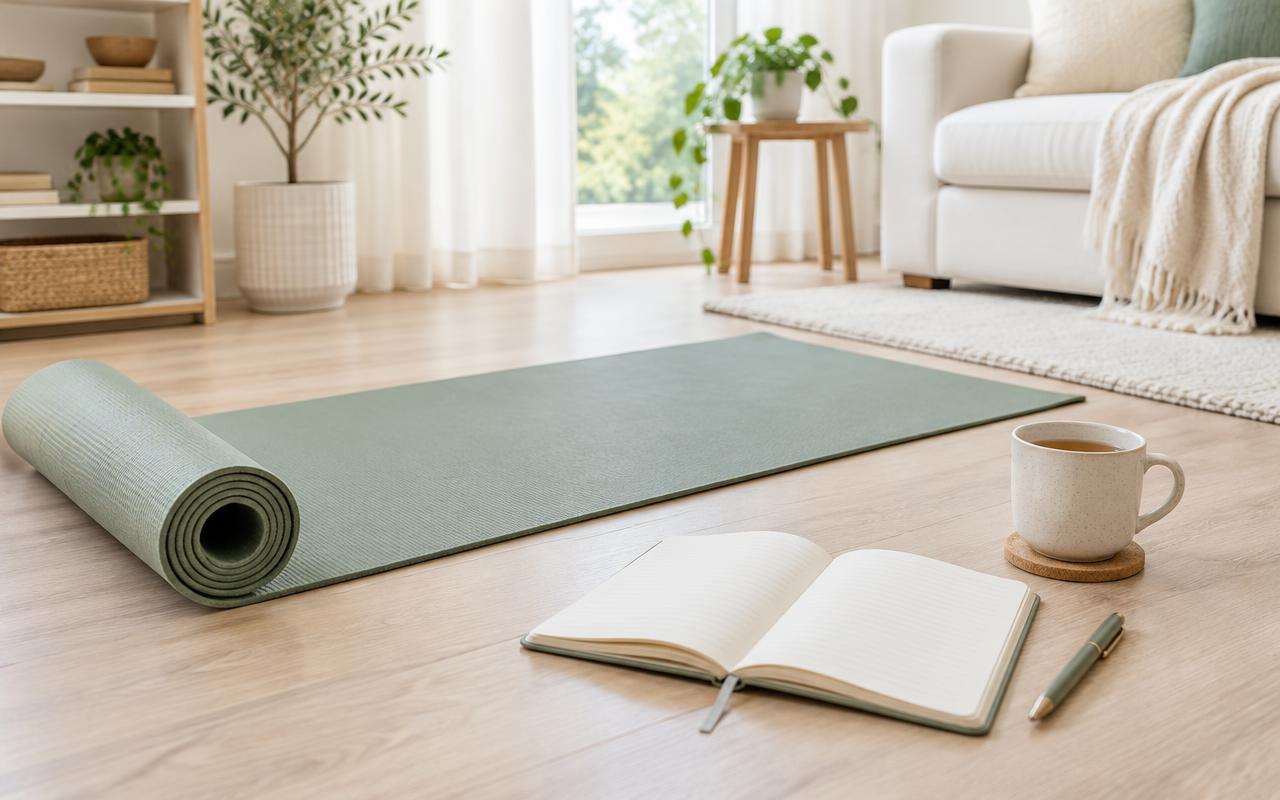
Try this: 10 minutes on the floor. Child's pose, cat-cow, and legs up the wall, with slow breaths in each.
-
Time outsideEmerging research
A growing body of research links time in green spaces with lower stress. Even a short walk around the block counts. The after-dinner walk is a regular in our house.
Try this: a 10-minute walk after dinner, without your phone. Notice three things you can see and two things you can hear.
-
Writing it downEmerging research
Studies on journaling and gratitude practices show modest benefits for mood and stress. Getting worries out of your head and onto paper can make them feel more manageable.
Try this: set a timer for 3 minutes and write down everything on your mind. Then write one thing that went well today.
How to start
Pick just one. Tie it to something you already do every day: after your morning coffee, in the car before school pickup, or after the dishes are done. Give it two weeks before deciding whether it's helping.
And if an app with a guided voice makes it easier for you, use it. The best tool is the one you'll actually come back to.